Morgue

 1972 -1974, 1986, 1990 - 1991

Artist Statement
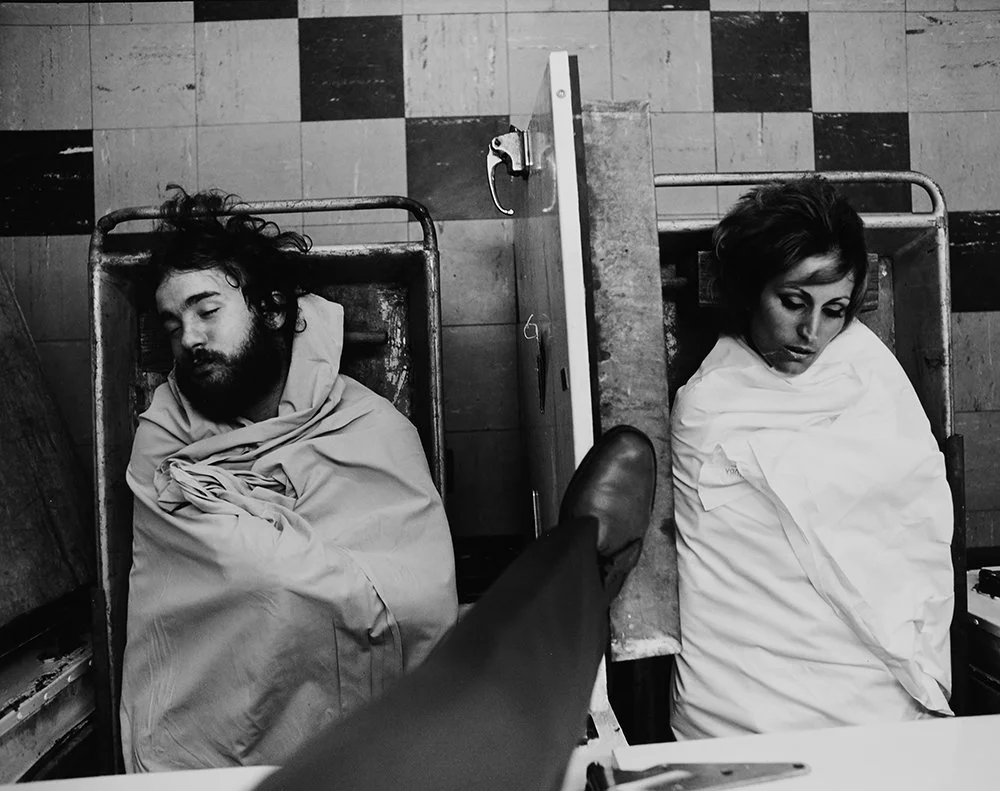
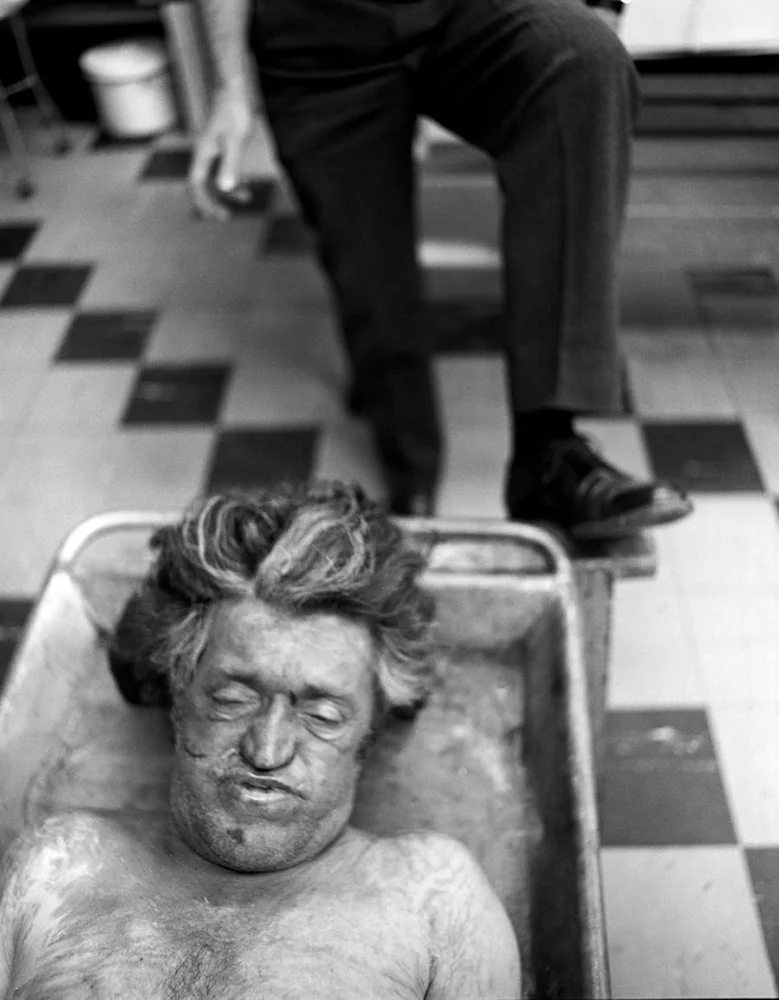
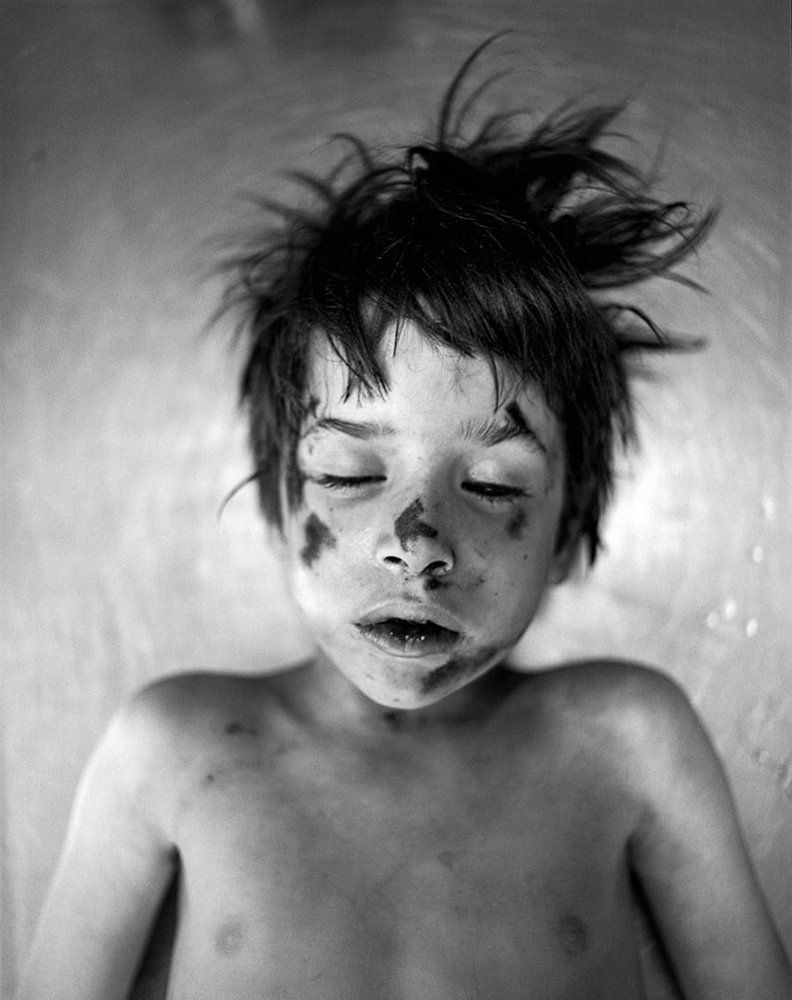
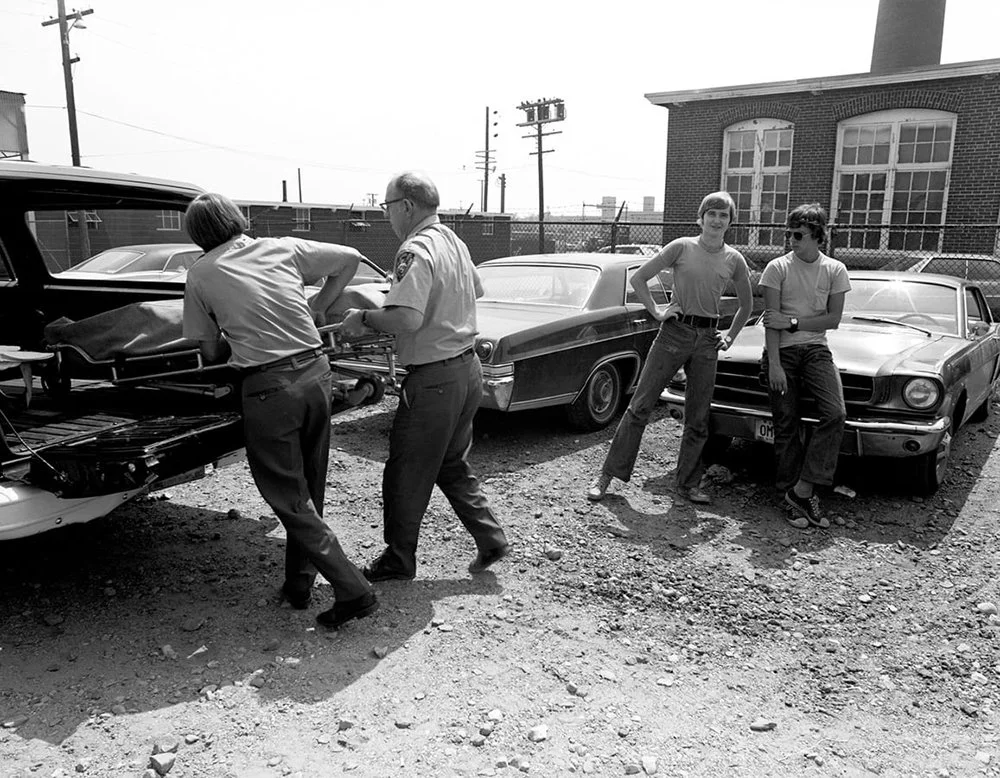
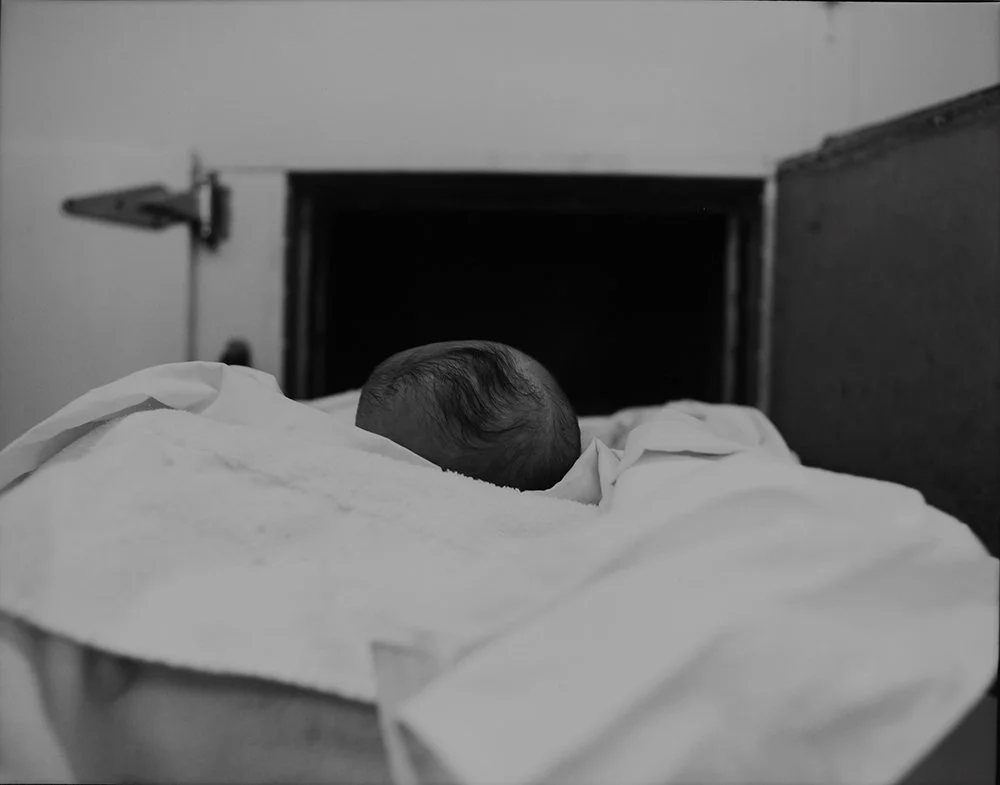
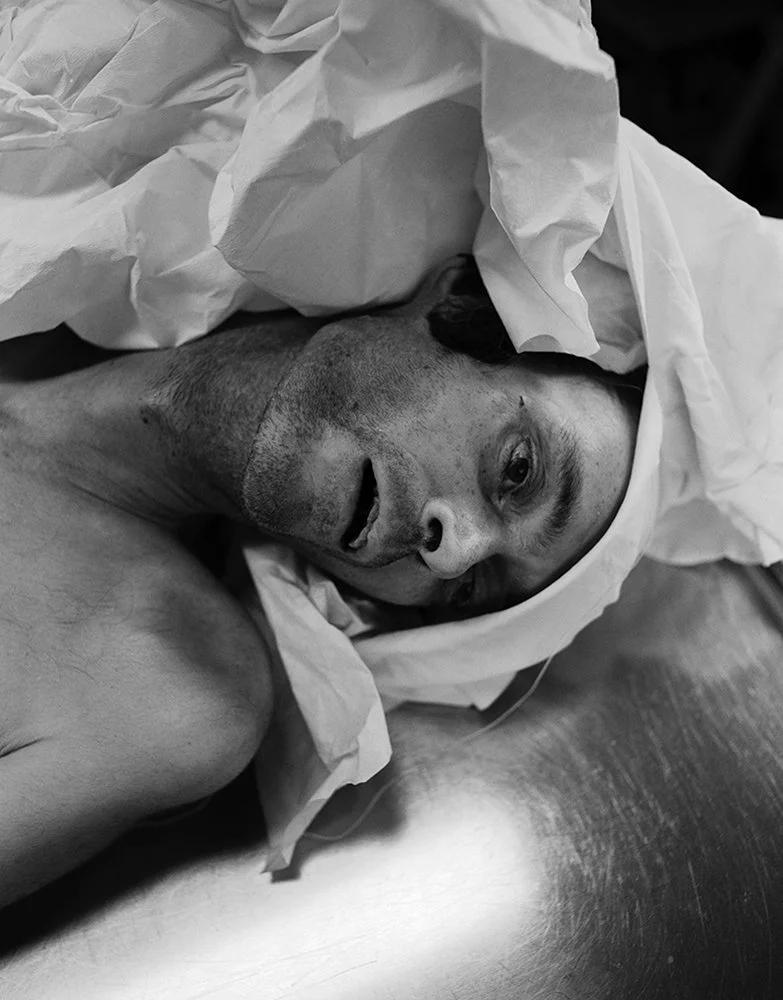
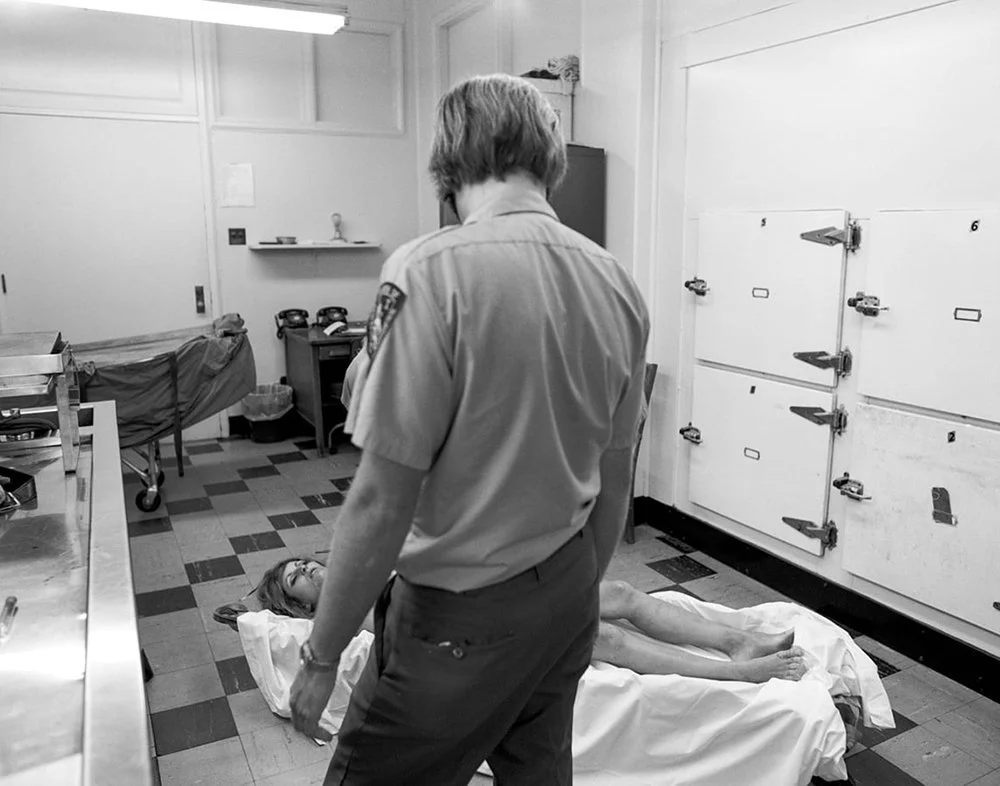
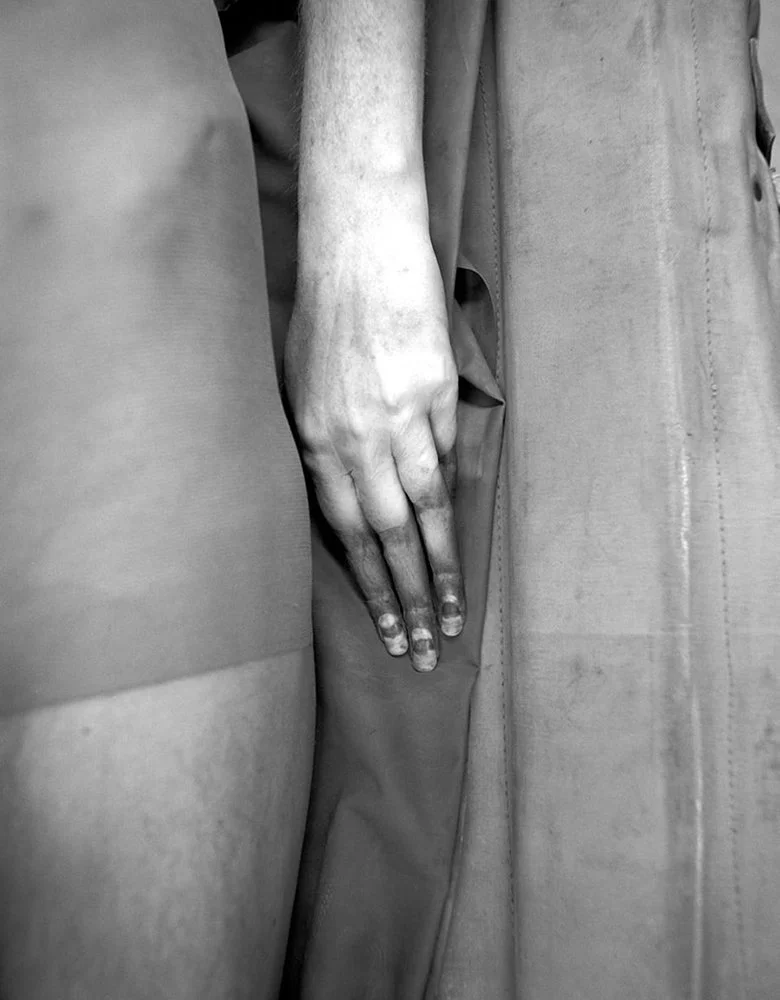
I can die in a moment, a crossing of borders. Death unpins and locks, time is measured and marked. For the living, personal considerations explode and drift to every feeling, while public regulations constrict and sentimentalize this unique and ordinary change.In 1961 I photographed my grandmother at her funeral as unnoticeably as I could. A few days later my camera disappeared and nobody spoke of it. I was fourteen. I knew I had been seen. Eleven years later, I was four years married, our second baby had just been born and the Vietnam War was still flowering death. Change and death were in the air, and the morgue was where I could find physical evidence. A corpse is sent to the state morgue if there are unknown or violent circumstances surrounding the death. If the death is expected, the morgue is an eventuality. If accidental, it is every hope gone wrong, every failure, and every question unanswerable. In the morgue, a place of science and legalities, the body is an artifact with only medical reasons and no relationships. The cautionary comfort taken from the Medical Examiner's diagnosis is small when put beside the fact that no one will again embrace the deceased, or smile into their eyes and speak tenderly, and the dead will never again eat, smile, or cry.

Over time the project evolved into anything but a documentary, it became a portrait of dreams and failures, a residue of realities. The good photograph somehow retains the equivalent of the cadaver's eye's vitreous fluid, which stays true to the life well past the time of death, an ocular proof. Ironies, such as the would-be murderer who was murdered or lovers who died by accidental carbon-monoxide poisoning, were punctuated by usual tragedies, the murders, suicides, heart attacks, and crib deaths. The morgue was black and silent, nothing given back. Every word was an empty gesture. Life ripped out cannot be made whole again. This endless repetition of ends became too much for me. I was different from the dead, I could walk out the door.

My parents died when I was young and in large part I went to the morgue looking for them. I did find them, many years later, in my heart.

Links
Time Magazine: Photographing the Dead (David Levi Strauss), 2017
American Suburb X: The Suture That Binds Us (Brad Feuerhelm), October 2017
Jeffrey Silverthorne's document of death in 1970s America (Katy Cowan), Creative Boom, October 2017
Looking at Death: Following Christ in the Embodied Life (Christine Lee Smith), November 2021